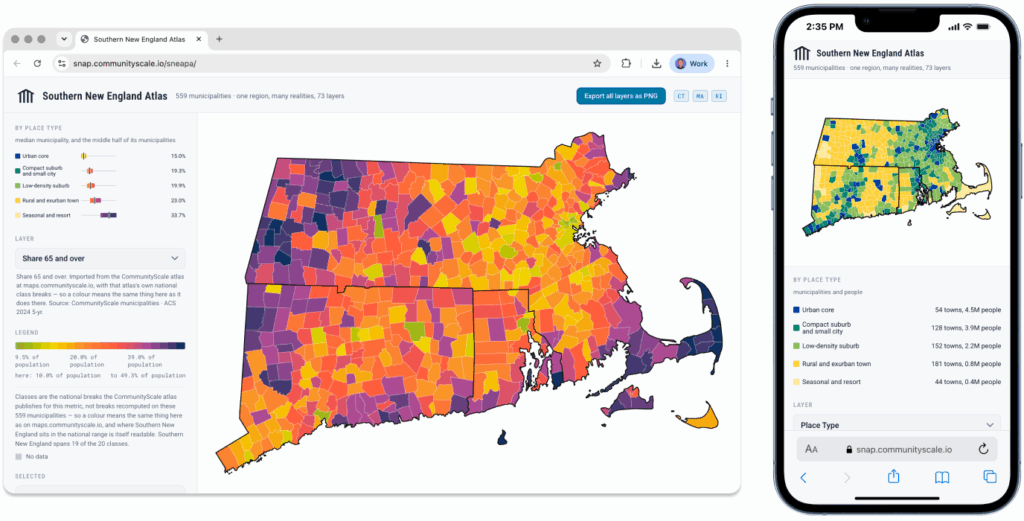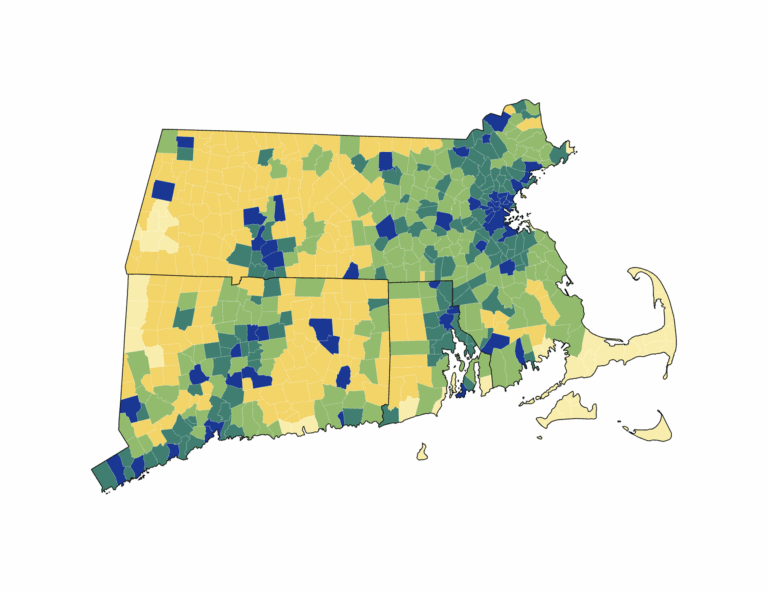
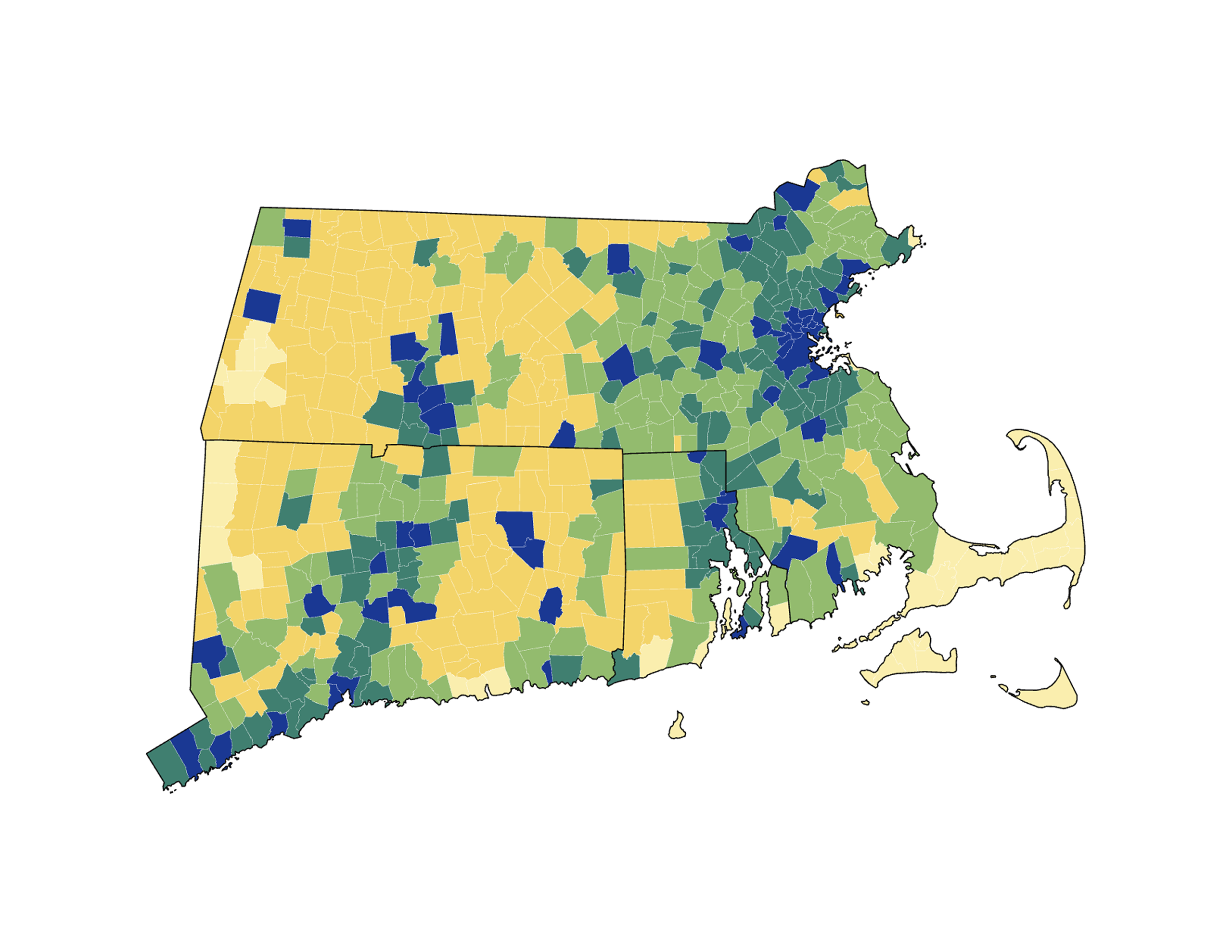
CommunityScale is joining a panel led by vhb to discuss the complex reality of Southern New England’s different community types. Over the past decade, communities across Massachusetts, Rhode Island, and Connecticut have experienced dramatically different trajectories in population growth, housing production, demographic change, and economic opportunity. Gateway cities, affluent suburbs, coastal communities, legacy industrial centers, and rural towns are responding to fundamentally different challenges, even as they operate within the same regional economy.
Our panel illustrates how key indicators have changed across all three states, including:
- Population growth and migration patterns
- Housing production, supply, and affordability
- Employment centers and regional job access
- Household income and economic opportunity
- Aging, household composition, and demographic change
- Housing cost burden and community vulnerability
Rather than offering a single prescription for success, the session demonstrates that effective planning begins with understanding context. Communities facing very different demographic and economic realities require different strategies, priorities, and expectations. By placing local decisions within a broader regional framework, planners can develop more informed, resilient, and context-sensitive solutions.
CommunityScale will share our five Southern New England place types, trend analysis, and samples of our custom datasets, such as Housing Ready and Annual VMT.