Affordable housing proposals in New Hampshire are often met with concerns that new developments will lower nearby property values. CommunityScale worked with New Hampshire Housing to examine whether affordable housing developments completed between 2010 and 2023 affected nearby home sale prices. In this study, “affordable housing” refers to income restricted, publicly subsidized housing developments, rather than homes that are simply affordable to a particular household. Although property value concerns frequently shape local housing discussions, they had not previously been tested using statewide New Hampshire housing market data.
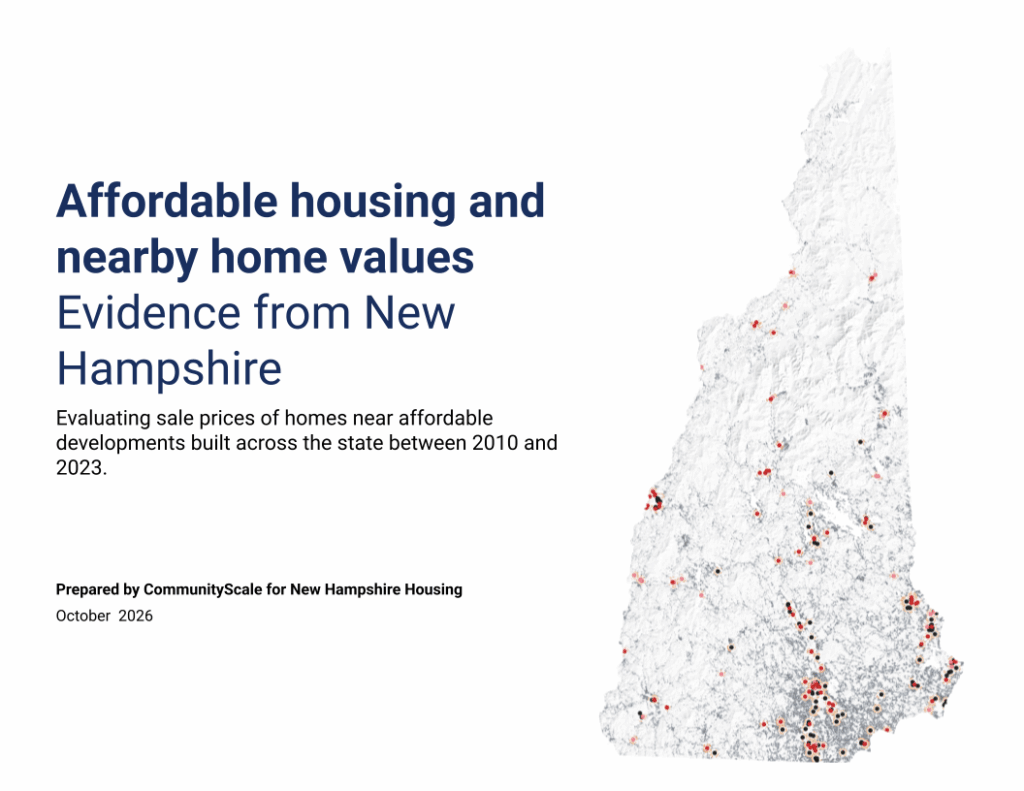
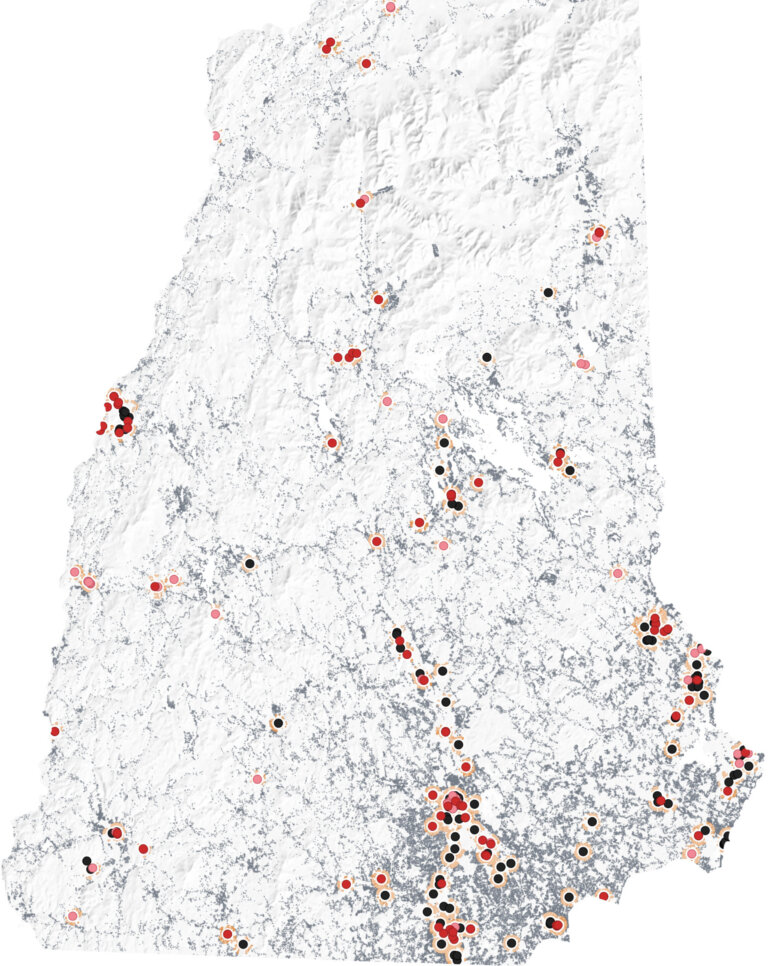
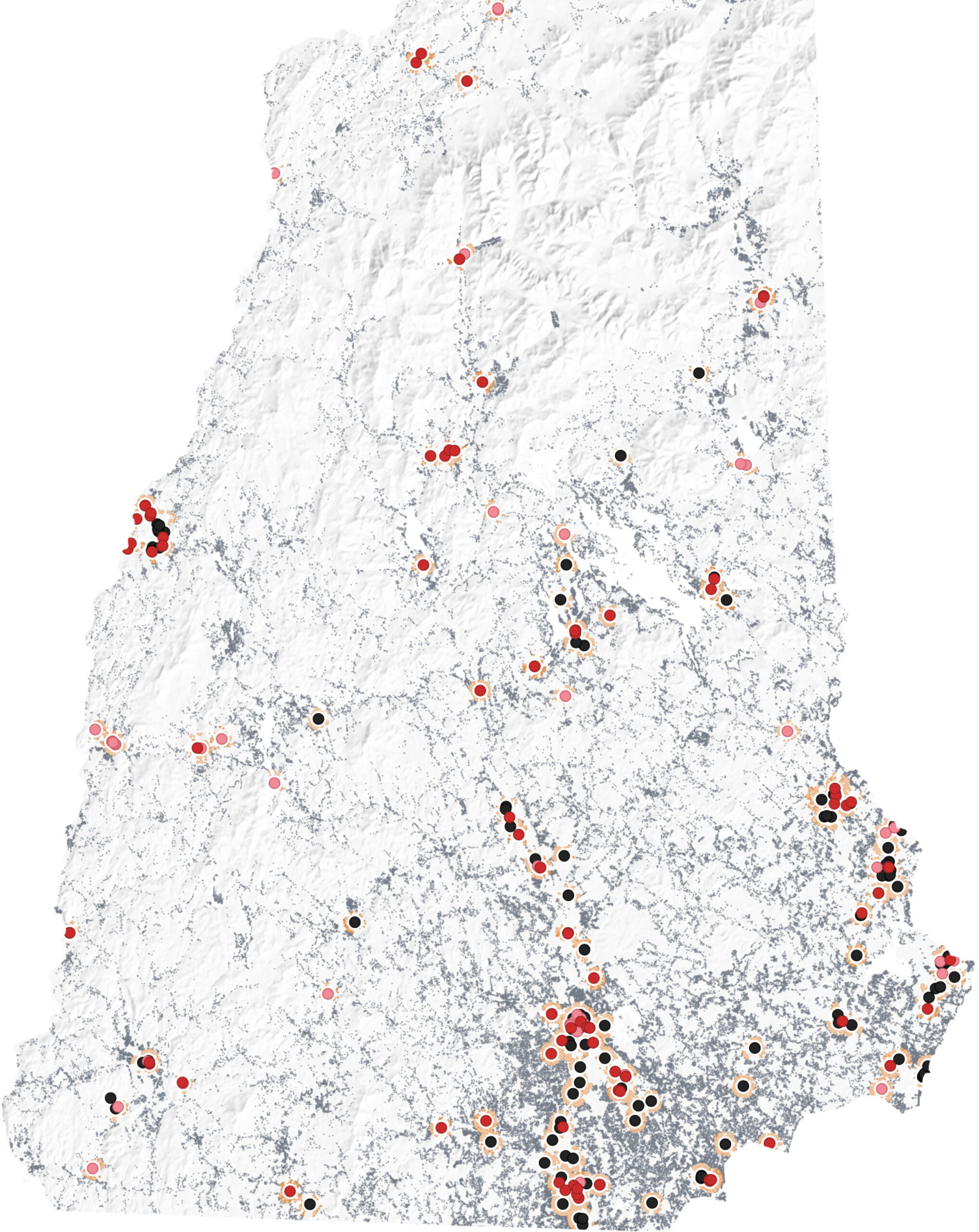
What We Studied: The analysis included 93 affordable housing developments with 3,124 units and 136 market rate multifamily developments with 11,334 units. These developments were linked to 68,488 open market home sales recorded between 2008 and 2025.
The study compared changes in sale prices for homes near each development before and after completion with changes for similar homes farther away in the same local housing market. The models accounted for differences in home characteristics, sale timing, and local market conditions. The findings were also tested using alternative distances, time periods, project sizes, and comparison groups, including market rate multifamily developments.
Key Findings
1. Affordable housing had no measurable average effect on nearby home prices. Under the preferred statewide model, every 10 affordable units built within a quarter mile was associated with a statistically insignificant 0.17 percent increase in nearby sale prices. That is equal to about $680 on a $400,000 home.
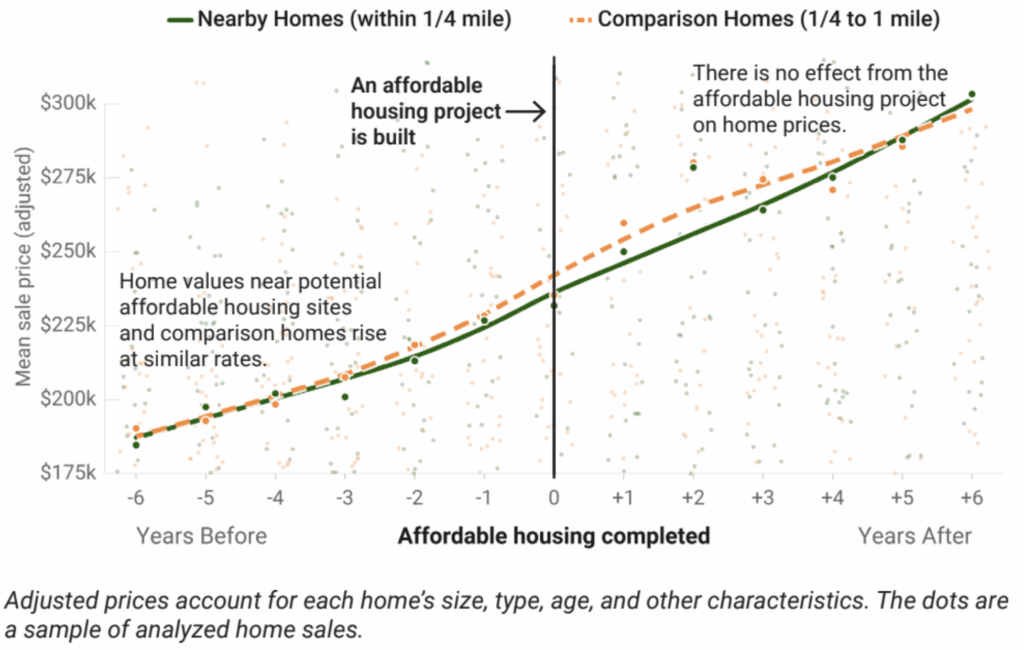
2. The preferred statewide model does not support a large average decline. The evidence rules out an average statewide property value loss beyond 1% decline. The study also found no systematic dip in prices during construction, immediately after construction, or a delayed decline in value.
3. Affordable housing and market rate housing produced similar results. When the two types of development were compared, neither had a measurable average effect on nearby home values.
4. Most subgroup analyses showed no measurable effect. The sample of affordable developments is further categorized by size, built environment context (urban, suburban, rural), target population (e.g. senior residence), neighborhood income levels, or affordability mix. However, there were no meaningfully different impacts on nearby home sales prices found within these categories.
What This Means: For New Hampshire communities, these findings provide strong evidence that concerns about affordable housing lowering nearby property values are not supported by observed housing market data. This does not mean every development will have the same effect, since projects differ in design, location, scale, management, and surrounding market conditions. However, the statewide evidence indicates that affordable housing, on average, does not produce the widespread decline in nearby property values often assumed during local development discussions. Decisions about proposed affordable housing should focus on directly reviewable factors such as site design, traffic, infrastructure capacity, and overall project quality, rather than generalized concerns about declining property values.